

A ceramic coating is often worth it, but only when the paint is in good condition, the owner plans to keep the vehicle for a reasonable amount of time, and expectations are grounded in what a coating can actually do. It’s important to understand ceramic coating delivers real value in the form of better gloss, easier maintenance, and longer-lasting protection. If you don’t check all of those boxes, you might find the money to be better spent on paint correction, a simpler protective service, or saved for when the timing is right.
What Is a Ceramic Coating?
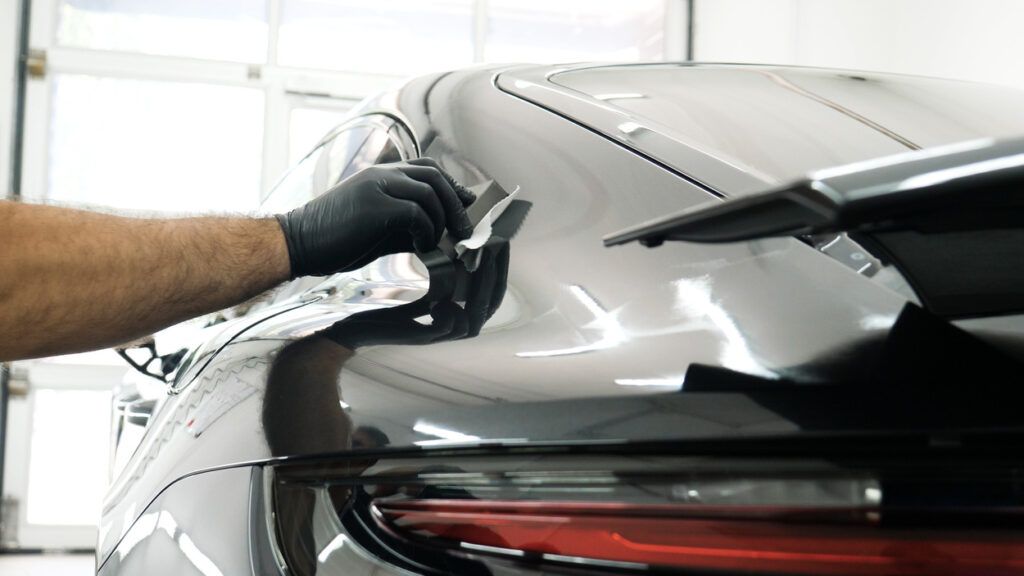
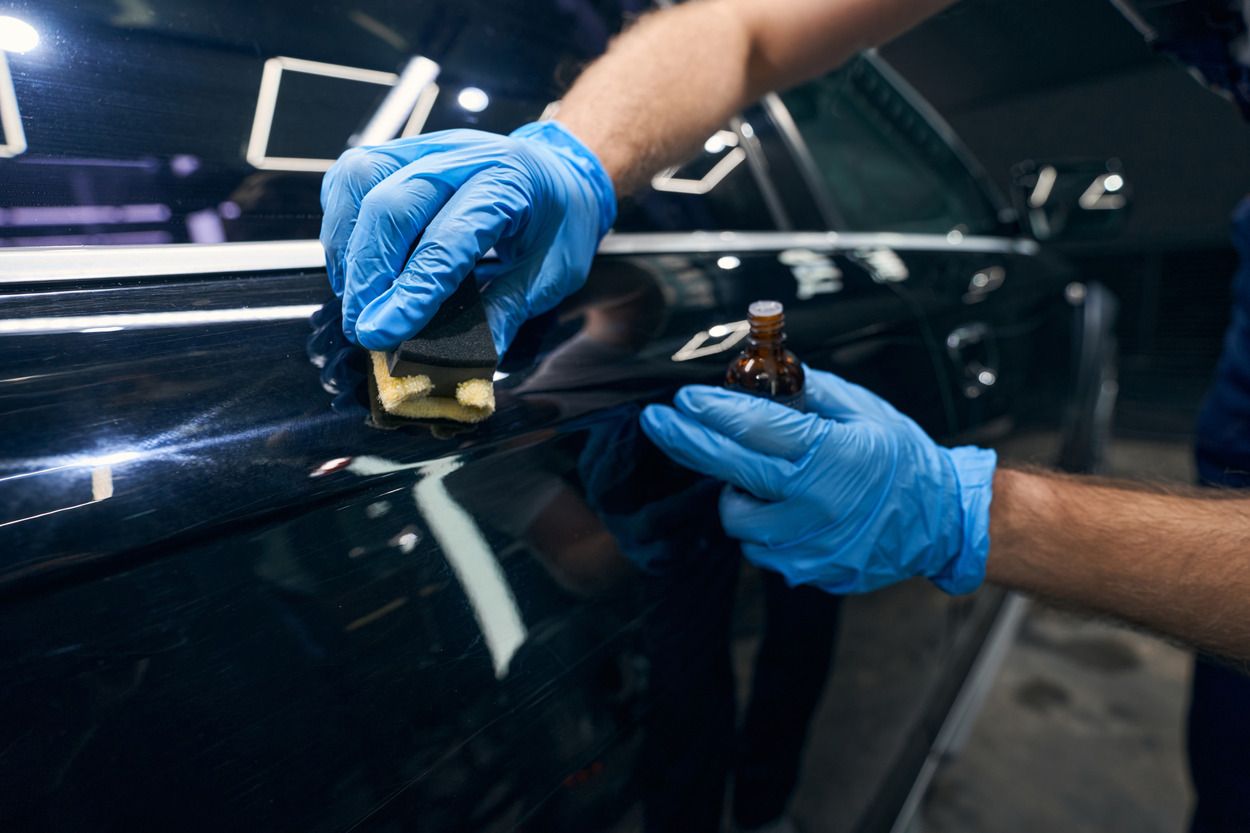
Ceramic coating is a liquid-applied protective layer that chemically bonds to a vehicle’s exterior surfaces, forming a semi-permanent barrier over the paint. Once cured, it creates a hydrophobic surface that repels water, resists environmental contaminants, and enhances the overall gloss of the finish.
It is not the same as wax or a traditional paint sealant. Both of those products sit on top of the paint and wear away within weeks or months. A professionally installed ceramic coating becomes part of the surface and is engineered to last for years.
There is also a meaningful gap between consumer-grade products sold at auto parts stores and professional-grade coatings applied in a controlled environment. The over-the-counter options can add some short-term hydrophobic behavior, but they wear down much faster and do not come close to the durability, depth of gloss, or chemical resistance that a professional installation provides. The difference comes down to chemistry, application standards, and the prep work that happens before the coating ever touches the paint.
The Short Answer: Is Ceramic Coating Worth It?
Ceramic coating is worth it for many vehicle owners, but it is not a universal recommendation. The deciding factors tend to be the current condition of the paint, the owner’s ownership timeline, and how realistic their expectations are.
When It Is Worth It
A coating tends to pay off when the paint is healthy, either because the vehicle is relatively new or because the owner has already invested in correcting imperfections. Owners who plan to keep the vehicle for three or more years get the most value, because the benefits of easier washing, reduced waxing, and preserved appearance compound over time.
It also makes strong sense for daily drivers that face constant exposure. A commuter vehicle that sits in the sun, picks up highway grime five days a week, and goes through regular washes will benefit more from a coating than a weekend car that lives in a climate-controlled garage.
When It May Not Be Worth It
If the paint has significant problems, such as oxidation, peeling clear coat, deep scratches, or a low-quality repaint, a coating is almost always the wrong next step. The coating seals in whatever is underneath it, so applying it over damaged paint locks those flaws in place and can make them more expensive to fix later.
It also may not make sense for someone who plans to sell or trade the vehicle within the next year. The upfront cost is harder to justify over a short window, and a thorough detail with a quality sealant will often deliver better short-term results at a fraction of the price. And if the expectation is that a coating will make the car scratch-proof or permanently clean without any washing, disappointment is almost guaranteed.
Core Benefits of Ceramic Coating
People choose ceramic coating for their cars and trucks for a wide variety of reasons. Whether you’re looking for the clean, glossy appearance, or protection from the elements, ceramic coatings have a lot to offer.
Better Appearance and Gloss
The first thing most people notice after a coating is applied is the depth of the finish. The paint looks richer, more reflective, and noticeably sharper. On darker colors like black, deep blue, and charcoal, the difference can be dramatic. Lighter colors benefit too, though the effect tends to show up more as a clean, wet-looking sheen rather than deep reflection. The coating also helps the paint stay cleaner looking between washes, which means the vehicle consistently presents well rather than only looking great right after a detail.
Easier Washing and Maintenance
This is often the benefit that owners appreciate the most after living with a coating for a few months. Because contaminants like road grime, pollen, bird droppings, and bug splatter do not bond as aggressively to a coated surface, the washing process becomes noticeably faster. A vehicle that used to take 45 minutes to wash properly might take 20. For owners in areas where pollen season coats everything in a yellow film or where road grime builds up quickly during wet months, that time savings adds up across dozens of washes per year.
Protection from the Elements
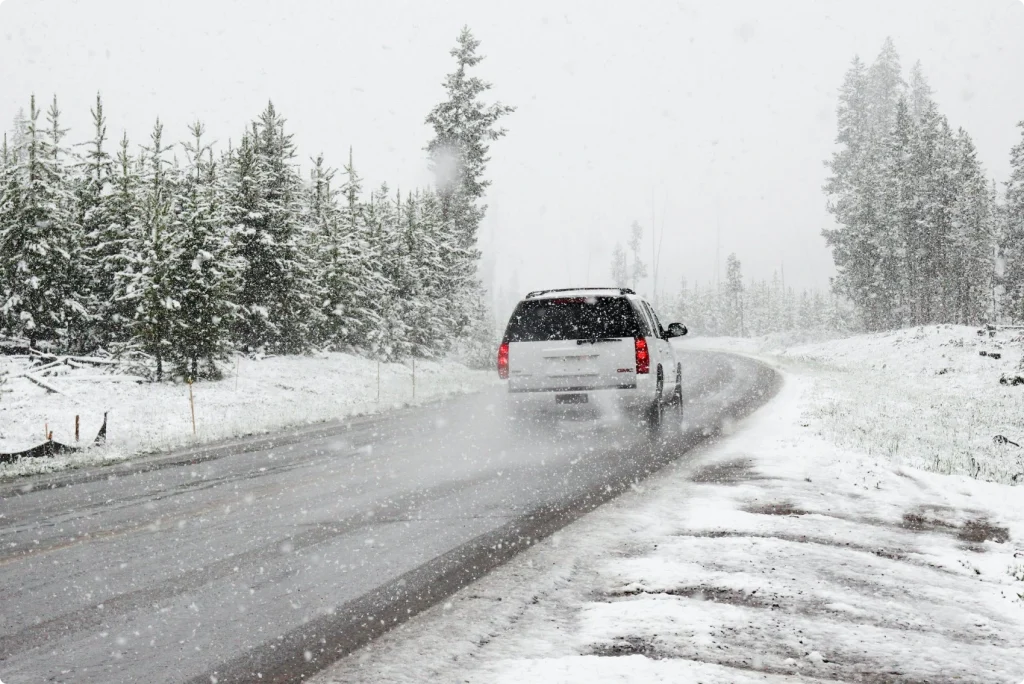
A quality coating helps resist UV damage, oxidation, bird droppings, tree sap, road salt, and a range of chemical contaminants that degrade unprotected paint over time. In Minnesota specifically, this protection matters because finishes face a punishing cycle: road salt and sand in winter, bug splatter and UV in summer, pollen and tree sap in spring, and leaf tannins in fall. That year-round exposure accelerates wear on unprotected paint in ways that owners in milder climates may not deal with.
Protection does not mean invincibility, though. A coating makes the paint more resilient, but heavily contaminated surfaces should still be cleaned promptly. Bird droppings and tree sap left for days may still etch through a coating if the exposure is long enough.
Potential Long-Term Cost Savings
A coating reduces the need for frequent waxing, cuts down on the time and products required for routine washing, and helps preserve the paint in better condition over the ownership period. For someone who keeps a vehicle for five to seven years, the savings on detailing labor, wax products, and paint maintenance can partially offset the upfront cost of the coating.
However, cost savings should not be overstated. Someone who trades in every two years or who would not have spent much on detailing anyway will see a smaller return. The strongest financial case for ceramic coating comes from long-term owners who would otherwise pay for periodic details, waxing, or paint correction down the road.
Ceramic Coating is Not a Magic Fix
The biggest source of frustration with ceramic coating usually is not the product itself. It is from mismatched expectations. Owners who go in thinking a coating will make their car scratch-proof, permanently spotless, or immune to rock chips are setting themselves up for disappointment.
A coating does not prevent all scratches from improper washing, shopping cart dings, or contact with abrasive surfaces. It certainly adds some surface hardness, but it is not armor. It also does not stop rock chips, which are caused by high-velocity impacts that virtually no surface coating can absorb.
It does not eliminate the need to wash the car. A coated vehicle still gets dirty, and if contaminants are allowed to build up over weeks without washing, the coating’s hydrophobic performance will suffer. The coating makes cleaning easier, but it does not make it optional.
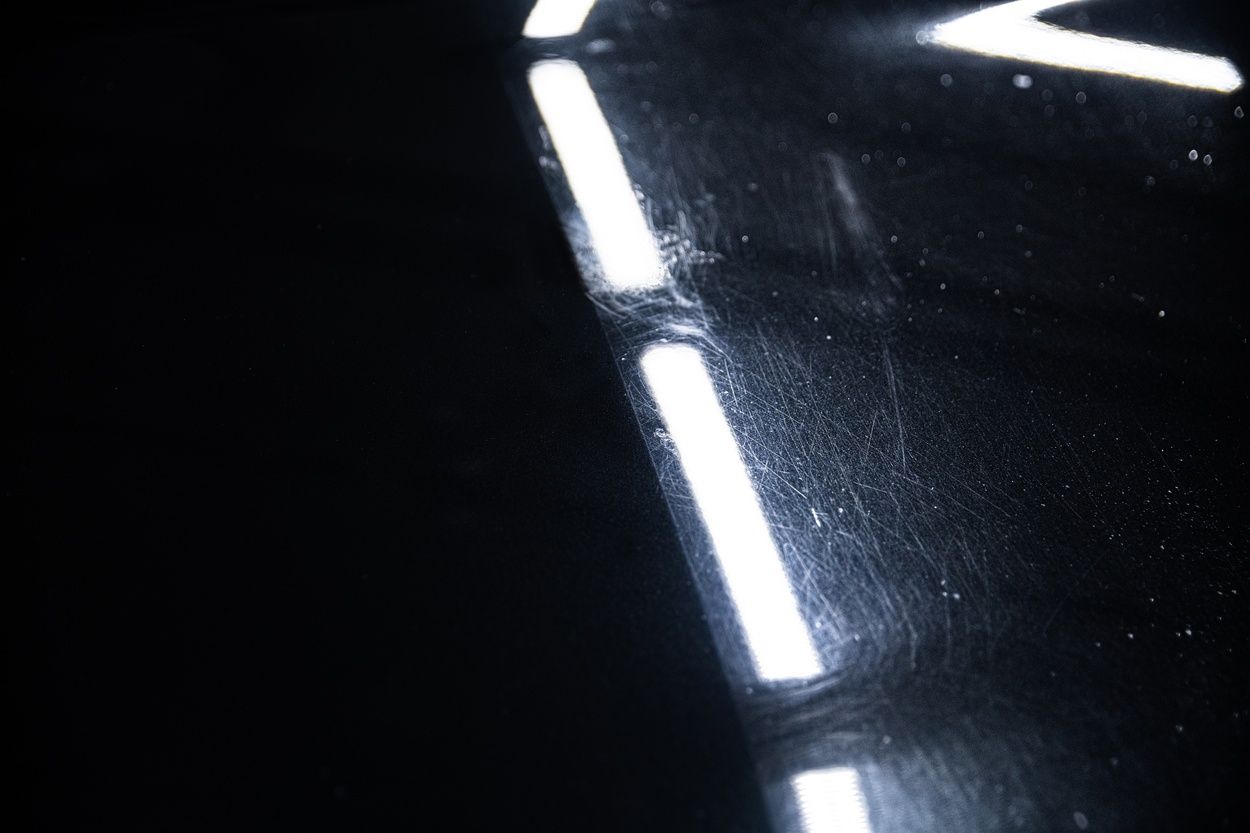
Most importantly, a coating does not fix or hide bad paint. Swirl marks, haze, scratches, and oxidation that exist before the coating is applied will still be visible afterward. In fact, because the coating adds clarity and gloss, existing imperfections can actually become more noticeable, not less.
Proper Prep Work Matters Most
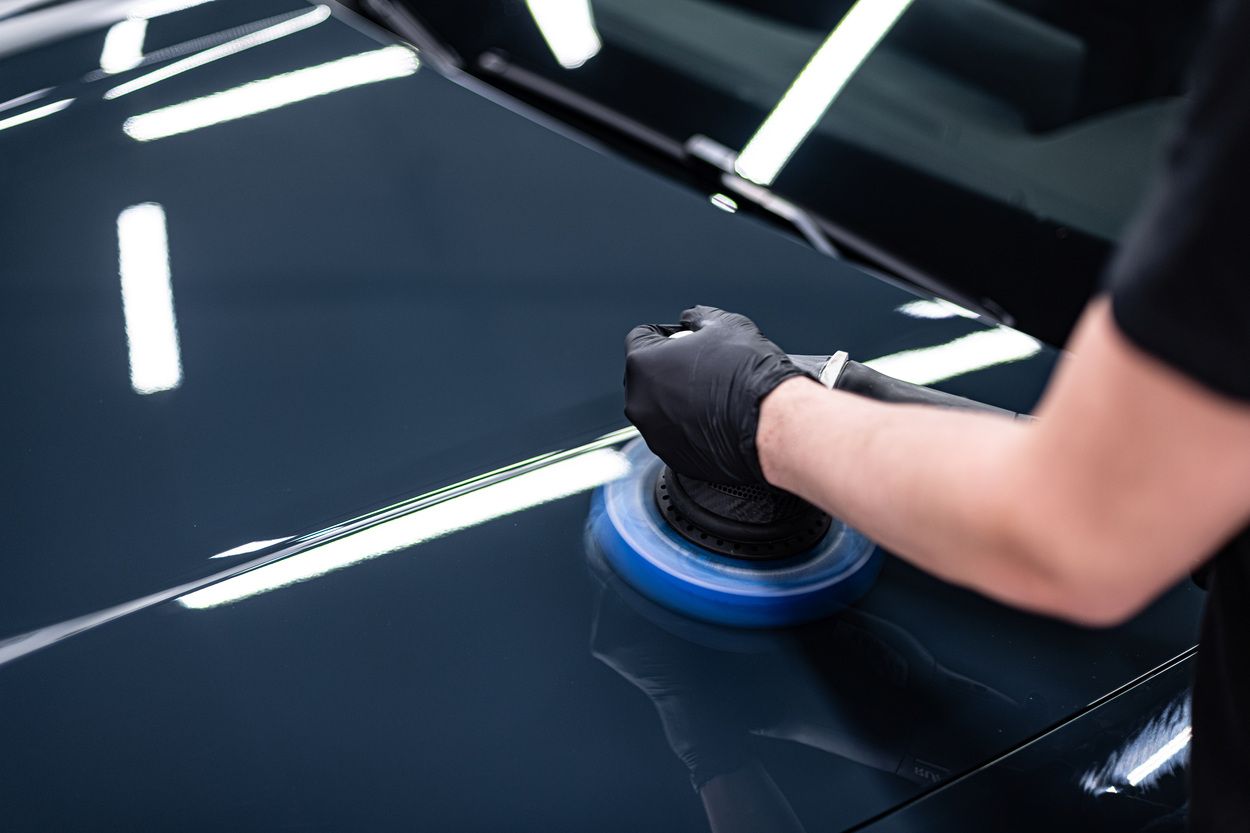
A ceramic coating locks in the condition of the surface at the time of application. Every swirl mark, contamination spot, haze line, or sanding mark that is present when the coating goes on gets sealed underneath it and becomes significantly harder to address later. This is why it’s important to invest in professional paint correction, unless you have all of the necessary tools and experience to do it yourself.
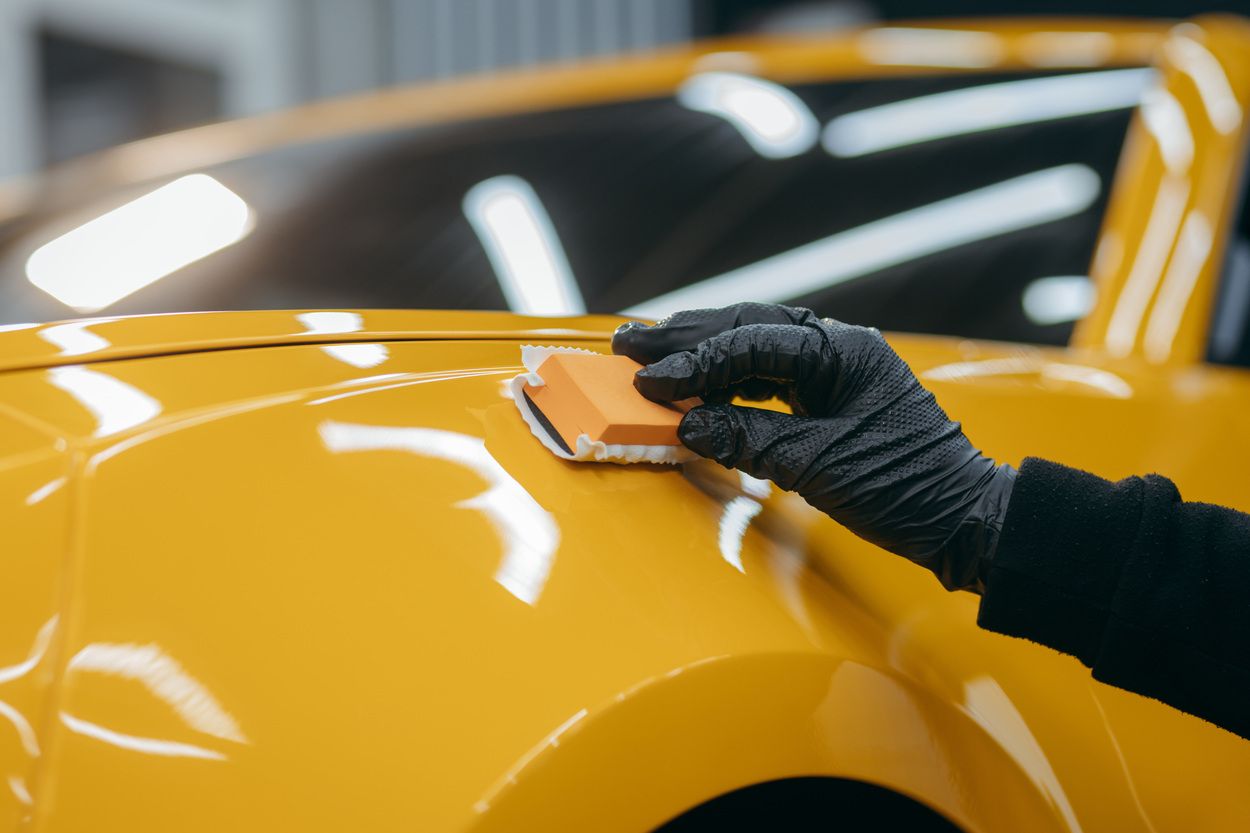
This is why surface preparation is arguably the most critical part of the entire process. Proper prep includes a thorough multi-stage wash, chemical and clay bar decontamination to pull embedded contaminants out of the paint, and paint correction to remove swirl marks, light scratches, and haze. On a new vehicle with factory paint in good condition, this process may be relatively straightforward. On a vehicle with a few years of wear, neglected maintenance, or a previous low-quality repaint, the correction work can be extensive.
From a detailer’s perspective, the condition of the paint when it comes through the door determines how much of the total job is prep versus coating. On some vehicles, prep accounts for the majority of the labor. That is also why pricing varies so much from one vehicle to the next. A three-year-old sedan with well-maintained paint needs far less correction than a five-year-old SUV that has been run through automatic brushed washes for years.
Why You Should Not Coat Bad Paint
If a vehicle has a peeling clear coat, heavy oxidation or rust, deep scratches from poor bodywork, or a low-quality repaint with orange peel and visible runs, those issues need to be resolved before a coating is applied. Coating over that kind of damage is the wrong order of operations and often leads to regret when the owner realizes the flaws are now sealed in for years.
This is especially important with premium coatings, which are designed for serious durability. Their longevity is a strength when the paint underneath is clean and corrected, but it becomes a liability when correction or bodywork is needed later. Removing a premium coating to fix underlying paint problems may require wet sanding or aggressive compounding, which adds significant cost and complexity.
Common Ceramic Coating Mistakes to Avoid
Over the years we have noticed a few recurring patterns that tend to trip up vehicle owners who are considering a coating for the first time. Here are a few things to consider before scheduling a ceramic coating at your local Minnesota detailer:
- Coating a car with unresolved paint issues: This is the most common and most costly mistake. Owners sometimes want to skip correction to save money upfront, but the result is a durable coating locked over imperfect paint. The money saved on prep is usually spent later on removal and rework.
- Choosing based on warranty length alone: A nine-year warranty sounds impressive, but the warranty is only as good as the prep, the installation, and the maintenance that follows. A premium product applied over uncorrected paint with poor technique will not deliver nine years of performance, regardless of what the paperwork says.
- Assuming the coating replaces regular washing: Some owners treat a coating like a set-it-and-forget-it solution and then wonder why the hydrophobic performance dropped off after six months. Coatings still need regular, proper washing to perform at their best.
- Picking the most expensive package without considering the ownership timeline: A premium multi-year coating is a great investment for someone who plans to keep the vehicle for a long time. For someone leasing or planning to trade in within two years, an entry-level coating or a quality sealant might deliver a better return.
- Skipping research on the installer: The product matters, but so does the person applying it. A less expensive coating installed by a meticulous detailer with proper prep can outperform a premium product that was rushed or applied in a dusty garage.
When We Recommend Ceramic Coating
Obviously, we are big fans of ceramic coatings here at OC Detail and generally recommend it for newer vehicles, daily drivers, and any car you want to protect for years to come. The important thing to remember is we need to have healthy paint for the coating to really be worth it.
Newer Vehicles with Healthy Paint
The best time to coat a vehicle is often when the paint is still in strong condition. A newer car with factory paint that has not been run through abrasive washes or left to oxidize in the sun typically needs less corrective work before coating, which means lower total cost and a cleaner starting point. Protecting the finish early, before years of environmental exposure take their toll, preserves the paint at its best.
Vehicles You Plan to Keep for Several Years
The longer the ownership period, the more value a coating delivers. Over the course of five, seven, or ten years, the cumulative benefits of easier washing, reduced waxing, and preserved paint condition become substantial. Someone who keeps a vehicle long-term gets far more return from a coating than someone who rotates cars every couple of years.
Daily Drivers (Especially in Minnesota)
In Minnesota, vehicles deal with a particularly aggressive cycle of environmental exposure. Winter brings road salt, sand, and chemical de-icers that coat the undercarriage and lower panels for months. Spring delivers pollen and tree sap. Summer brings UV exposure, bug splatter on highway commutes, and water spots from hard water. Fall adds leaf tannins and early frost. A coating does not eliminate the need to deal with any of those, but it makes the cleanup after each season significantly easier and helps the finish hold up better through the constant cycling between conditions.
Owners who regularly use touchless car washes during winter months to rinse off salt buildup also benefit from coatings, because the hydrophobic surface releases grime more readily than uncoated paint.
Owners Who Take Pride in Appearance
Ceramic coating is a natural fit for people who genuinely care about how their vehicle looks. Whether it is a higher-end luxury vehicle, an enthusiast car, or simply a daily driver the owner wants to keep looking sharp, the combination of enhanced gloss and easier upkeep makes the experience of owning the vehicle more enjoyable.
When Ceramic Coating May Not Be Worth the Cost
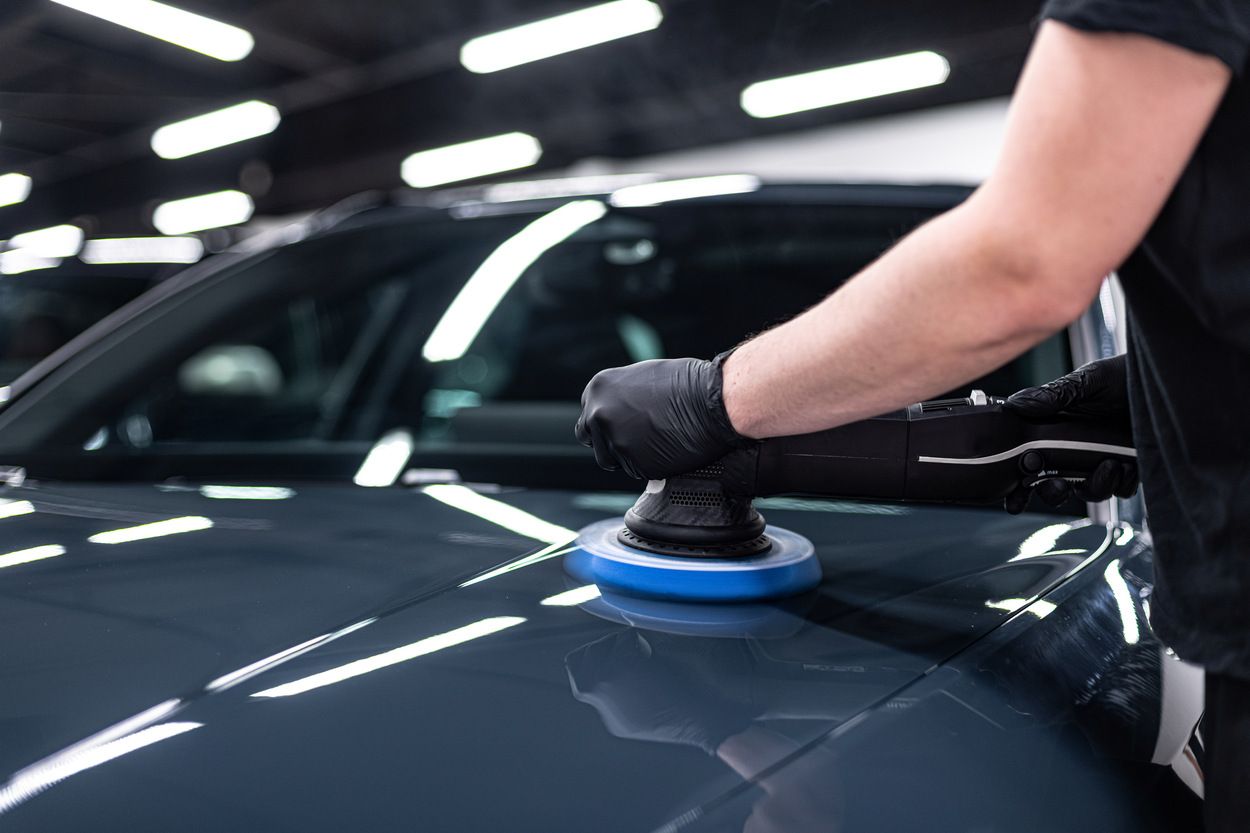
While we would love to sell everyone our premium ceramic coating services, ceramic coating is simply not the right choice for everyone.
The Paint Needs Work First
If the vehicle has clear coat failure, heavy oxidation, or damage from a poor-quality respray, those issues should be addressed before coating becomes part of the conversation. Sealing damaged paint under a durable coating creates a more expensive problem down the road.
You Are Selling or Trading In Soon
When the ownership window is short, the long-term benefits of a coating do not have time to materialize. A thorough detail with a quality sealant is usually the smarter investment for someone preparing to move on from a vehicle within the next year.
You Want Protection but Not the Full Investment
Not every vehicle needs a premium package. For some owners, a shorter-term sealant or an entry-level coating provides enough improvement in gloss and wash ease at a lower price point. A well-maintained one-year coating on a mid-range commuter car can be a perfectly reasonable choice.
You Are Not Going to Maintain It
A coating (or any paint job) that never gets washed properly will underperform. Contaminant buildup, water spots, and general neglect degrade the coating’s hydrophobic properties over time. If keeping up with regular washing is not realistic, the coating will not live up to its potential.
Granted, this goes for all surfaces. Since we are a bunch of car nuts here, we encourage everyone to wash their vehicle and take decent care of it. Minnesota is harsh on paint the way it is, the least you can do is give your car a wash every now and again to maximize its life.
Are All Ceramic Coatings the Same?
Ceramic coatings vary widely in chemistry, durability, performance characteristics, warranty terms, and installation standards. The price range reflects those differences.
Entry-Level Coatings
These products come at a lower price point and can still deliver noticeable improvements in gloss and water behavior. Depending on the specific product and how well the vehicle is maintained, entry-level coatings typically last anywhere from one to three years. They are a reasonable choice for owners who want some of the maintenance and appearance benefits without committing to a larger investment.
Premium Coatings
Higher-end coatings are formulated for superior longevity, stronger chemical resistance, and richer gloss. Some carry warranties of nine years or more. That durability is a major advantage, but it also means these coatings are much harder to remove if the need arises. In cases where paint correction or bodywork becomes necessary after a premium coating has been applied, removal may require wet sanding or aggressive compounding, adding time and cost. This is one of the strongest reasons to make sure the paint is right before going with a premium product.
Installation Quality Matters as Much as the Product
Even the best coating on the market will deliver mediocre results if the prep and application are subpar. The level of paint correction, the cleanliness of the application environment, and the installer’s attention to detail all influence how well the coating bonds and how long it performs. A well-prepped vehicle with a mid-tier coating can easily outperform a poorly prepped vehicle with a flagship product.
Ceramic Coating vs. Other Options
Ceramic is one of the many available options on the market. From vehicle wraps, to traditional wax, all have their pros and cons. Here’s what you need to know:
Ceramic Coating vs. Wax
Wax is the most traditional and affordable form of paint protection. It is easy to apply at home and gives a warm, natural-looking shine. The trade-off is durability. Most waxes last only a few weeks before they break down and need to be reapplied. Ceramic coating offers significantly longer protection, stronger chemical resistance, and more consistent hydrophobic performance across its lifespan.
Ceramic Coating vs. Sealant
Paint sealants offer a middle ground between wax and ceramic coating. They are more affordable than a professional coating, can last several months, and provide decent short-term protection. For someone who wants improved wash ease and gloss without the investment of a full coating, a quality sealant can be a smart option. For longer-term durability and stronger performance, ceramic coating is the step up.
Ceramic Coating vs. Paint Protection Film
Paint protection film (PPF) and ceramic coating serve different purposes. PPF is a physical film that absorbs impacts from rock chips, road debris, and minor abrasions. Ceramic coating focuses on gloss, contamination resistance, hydrophobic behavior, and easier cleaning. The two complement each other well, and some owners choose both: PPF on high-impact areas like the front bumper, hood, and mirrors, with ceramic coating over the rest of the vehicle and sometimes over the film itself.
How to Decide if Ceramic Coating Is Worth It for Your Vehicle
Rather than thinking about ceramic coating as a yes-or-no purchase, it helps to work through a few honest questions. How long do you plan to keep the vehicle? Is the paint currently in good shape, or does it need correction first? Are you willing to invest in that correction if needed? Do you want easier maintenance and a glossier finish, or are you just looking for a quick cosmetic boost before selling? And are you comparing short-term price against long-term value, or just sticker cost?
A Simple Rule of Thumb
If the paint is in good condition, you plan to keep the vehicle for several years, and you value easier maintenance and a better-looking finish, ceramic coating is very often worth the investment. If the paint needs significant work, the vehicle is about to change hands, or proper maintenance after coating is not something you plan to keep up with, it may be better to wait, choose a simpler service, or address the paint issues first.
So, Is Ceramic Coating Worth It?
For many vehicle owners, yes. The combination of better appearance, easier cleaning, durable protection against environmental contaminants, and reduced long-term maintenance costs makes ceramic coating a strong investment when the conditions are right.
But the outcome always depends on what is underneath the coating. Starting with healthy, properly corrected paint is the single biggest factor in whether a coating delivers on its potential. Owners who understand that a coating is a way to protect and enhance good paint, rather than a way to fix or hide bad paint, tend to be the most satisfied with the results.
The right coating is not always the most expensive option available. It is the one that fits the vehicle’s condition, the owner’s goals and driving habits, the local climate, and the budget. When those factors lineup, ceramic coating is one of the best investments a vehicle owner can make in long-term appearance and protection.
If you happen to be in Minnesota and want to get the best results from your ceramic coating, it’s best to have it professionally installed by our team here at OC Detail. We can help guide you on prep, products, and what solutions are best for you. Contact us today to learn more.
Frequently Asked Questions About Ceramic Coating
Is ceramic coating worth it on a daily driver?
Daily drivers are often among the best candidates for ceramic coating because they accumulate the most exposure to road grime, UV, bird droppings, salt, and weather. A coating makes the constant cycle of getting dirty and washing significantly easier to manage, which is especially valuable for owners who do not have time for labor-intensive detailing after every commute.
How long does ceramic coating last?
Longevity depends on the product, the quality of the prep work, and how well the vehicle is maintained afterward. Entry-level coatings generally last one to three years. Premium professional-grade coatings can last five years or longer, with some carrying warranties of nine years or more. Real-world durability also depends on driving conditions and wash habits.
Does ceramic coating prevent scratches?
It adds some surface hardness that can help resist light marring, but it does not make the vehicle scratch-proof. Scratches from improper washing, abrasive contact, and road debris can still occur. For physical impact protection, paint protection film is the better option.
Is ceramic coating better than wax?
Ceramic coating lasts far longer, provides stronger chemical and environmental resistance, and maintains more consistent hydrophobic behavior over time. Wax is less expensive and easier to apply at home but requires frequent reapplication. For long-term protection and lower-effort maintenance, ceramic coating is the stronger choice.
Should I ceramic coat a car with bad paint?
In most cases, no. A coating locks in the condition of the paint, so defects like swirl marks, oxidation, haze, or peeling clear coat will be preserved underneath it. Correcting the paint first and then applying the coating produces a dramatically better result and avoids the cost and difficulty of removing a coating to fix problems later.
Can ceramic coating save money over time?
It can, particularly for long-term owners. The reduced need for waxing, faster wash times, fewer professional details, and preserved paint condition can add up to meaningful savings over several years. The return is less significant for owners who trade vehicles frequently or who would not have invested much in detailing regardless.
What is the difference between a cheap ceramic coating and a premium one?
Entry-level coatings use simpler formulations, tend to have shorter lifespans, and may not include the same depth of professional prep and controlled-environment installation. Premium coatings are built for longer durability, stronger chemical resistance, and richer gloss, and typically come with multi-year warranties. The best choice depends on the vehicle, the ownership timeline, and the budget rather than simply defaulting to the most expensive option.
Can ceramic coating be removed?
Yes, but the process varies. Entry-level coatings may wear off naturally over time or come off with a standard polish. Premium coatings can require compounding, heavy polishing, or in some cases wet sanding to fully remove. This is a key reason why making sure the paint is properly corrected before applying a long-term coating matters so much.